Fire Suppression Systems for Commercial Buildings: Choosing the Right Protection for Your Facility
Every commercial facility carries unique operational hazards, structural configurations, and asset values that require specialized fire suppression systems. Relying on a single fire protection strategy often leads to gaps in safety and compliance. When protecting life, physical structure, and high-value equipment, choosing the correct commercial fire suppression system is essential for maintaining business continuity and satisfying local building codes. Before installing or modifying any safety setup, facility managers must verify that all field components maintain current safety documentation, such as fire system inspection tags, ensuring equipment is fully active and compliant with National Fire Protection Association (NFPA) standards.
Understanding Commercial Fire Suppression Systems
A commercial fire suppression system is an engineered group of units designed to detect fires early, control or extinguish them, and prevent rekindling. While standard fire sprinkler systems utilize water to extinguish flames, specialized suppression systems use chemical agents, inert gases, or micro-fog to suppress fire without water damage.
These systems react automatically to heat, smoke, or flame detection, isolating the hazard before it spreads throughout the building. Integrating suppression units with your overall fire safety framework ensures rapid response and minimizes downtime.
Key Types of Commercial Fire Suppression
Selecting the right protection depends heavily on what you are protecting. Water can destroy sensitive electrical components, while standard foam may be ineffective against specialized chemical risks. Below are the primary commercial fire suppression systems utilized across modern facilities.
Clean Agent Fire Suppression Systems
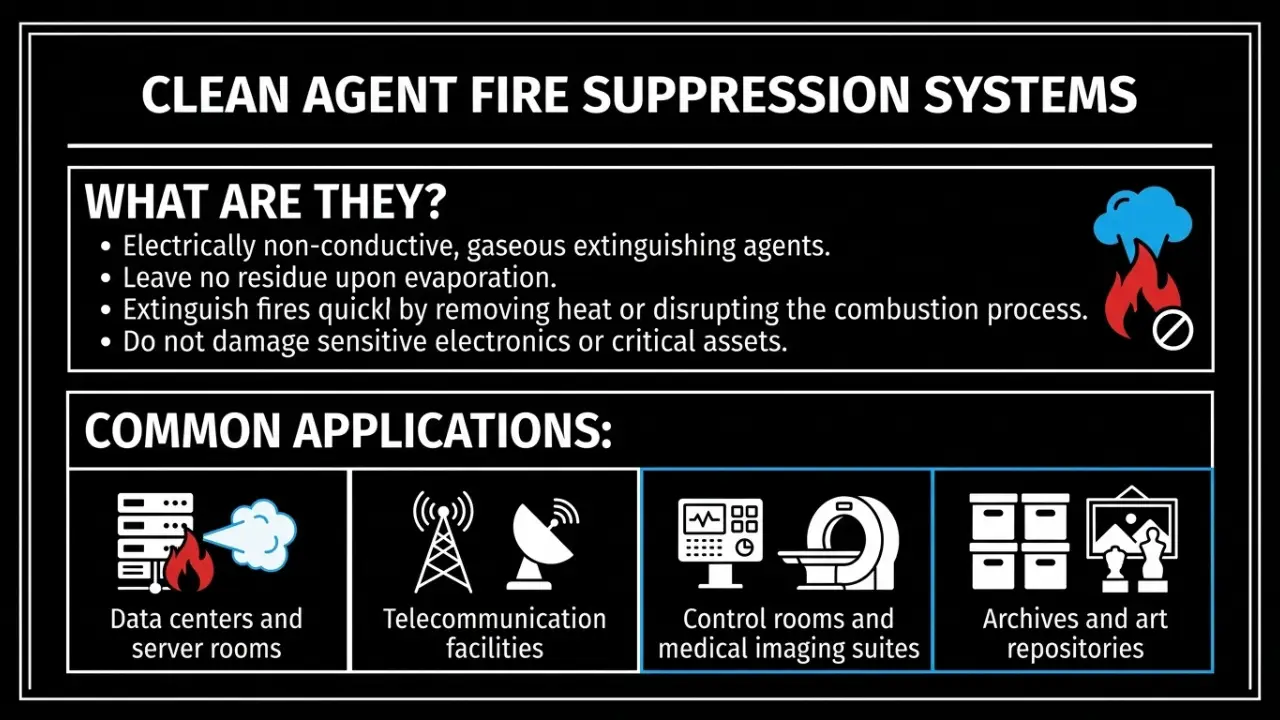
Clean agent systems use electrically non-conductive, gaseous fire-extinguishing agents that leave no residue upon evaporation. They extinguish fires quickly by removing heat or disrupting the combustion process at a molecular level without damaging sensitive electronics or critical assets.
Common applications include:
- Data centers and server rooms
- Telecommunication facilities
- Control rooms and medical imaging suites
- Archives and art repositories
FM-200 Fire Suppression Systems
Among clean agents, FM-200 fire suppression is one of the most widely deployed solutions. FM-200 (HFC-227ea) reaches extinguishing levels in 10 seconds or less, stopping combustible, electrical, and flammable liquid fires before they cause significant structural harm.
Because FM-200 leaves no oily residue or particulate matter, cleanup time is eliminated, allowing businesses to resume normal operations almost immediately following a discharge event.
Commercial Kitchen Hood Suppression
Commercial kitchens in restaurants, hotels, and institutional facilities face high grease-fire hazards. Kitchen hood suppression systems deploy wet chemical agents specifically formulated to saponify burning fat and oil, forming a thick foam blanket that cuts off oxygen and prevents re-ignition.
CO2 and Inert Gas Systems
Carbon dioxide (CO2) and inert gas suppression systems reduce oxygen concentrations in an enclosed area below the level required for combustion. Highly effective for unoccupied spaces, industrial storage, and heavy power-generation setups, these systems offer powerful protection for specialized hazards.
“Fire spread was confined to the object or room of origin in 94 percent of the reported structure fires in which automatic extinguishing systems were present.”
How to Select the Right Suppression System for Your Facility
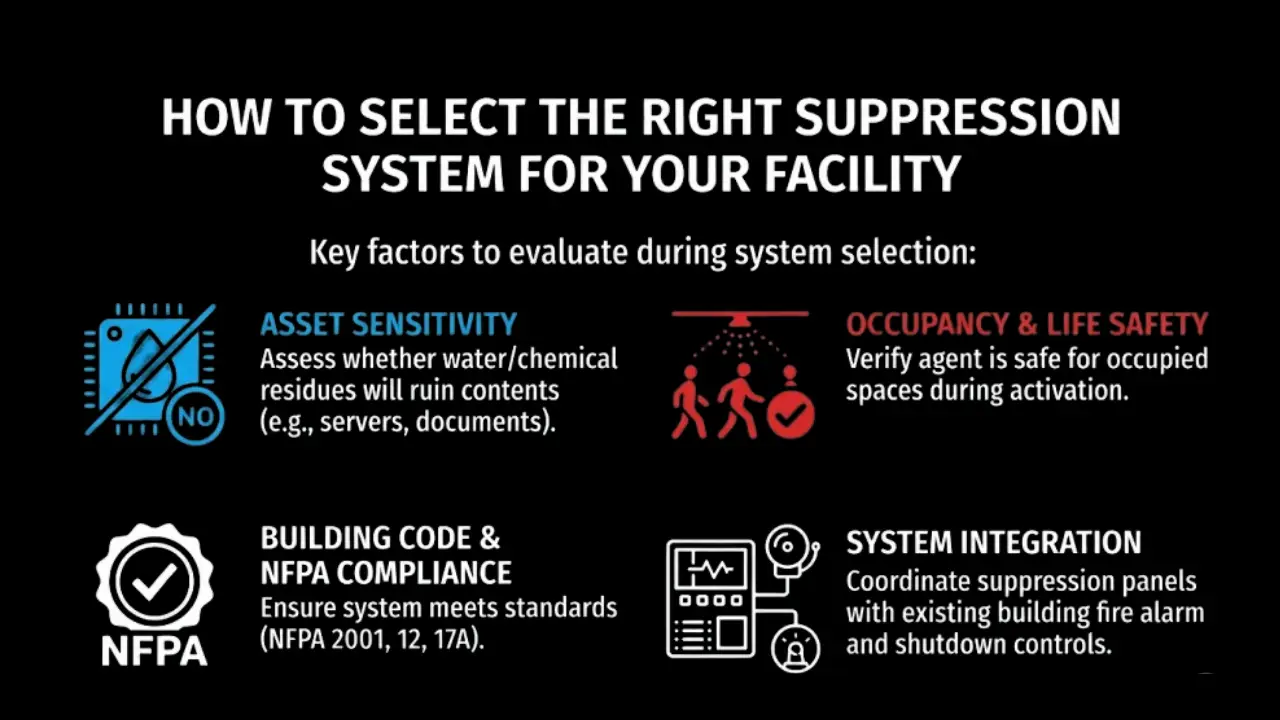
Selecting the ideal suppression method requires analyzing building layouts, occupancy types, and asset sensitivity. Working alongside a qualified fire suppression company ensures that system design aligns with local authority requirements and NFPA specifications.
Key factors to evaluate during system selection include:
- Asset Sensitivity: Assess whether water or chemical residues will permanently ruin the contents of the room (e.g., servers, documents, or high-tech equipment).
- Occupancy & Life Safety: Verify that the chemical or gaseous agent chosen is safe for occupied spaces during activation.
- Building Code & NFPA Compliance: Ensure your system meets NFPA 2001 (Clean Agent Fire Extinguishing Systems), NFPA 12, or NFPA 17A standards depending on agent selection.
- System Integration: Coordinate suppression panels with existing building fire alarm systems and emergency shutdown controls.
Importance of Routine Inspection and Maintenance
An installed suppression system is only as reliable as its last inspection. Environmental conditions, mechanical vibration, and age can affect pressure vessel charge, actuator function, and detection responsiveness. Establishing a regular schedule with a certified service team prevents system failures when protection is needed most.
Comprehensive maintenance includes inspecting piping, testing control panels, verifying cylinder pressure, and confirming proper nozzle clearance across all protected zones. Keeping your equipment up to code ensures your property remains protected and compliant with state and local regulations.
For facility managers seeking trusted protection, commercial sprinkler installation and integrated life safety design provide the critical foundation needed to defend commercial properties against catastrophic fire damage.