Fire Sprinkler System Inspections: What Texas Businesses Need to Stay Compliant
Fire Sprinkler System Inspections are essential for operating a commercial property in Texas, where managing continuous operational demands, employee safety, and state building regulations go hand-in-hand. Among your critical responsibilities, maintaining operational life safety equipment remains paramount. Routine fire sprinkler system inspection schedules safeguard physical assets, protect occupants, and prevent severe regulatory fines or mandatory facility shutdowns.
Fire protection codes set rigorous standards across the state. Understanding local requirements ensures your facility stays operational, safe, and fully compliant. Having valid fire system inspection tags attached to your risers provides tangible proof to local Authorities Having Jurisdiction (AHJs) that your equipment meets strict safety protocols.
Understanding Commercial Sprinkler Inspection Standards in Texas
Commercial fire protection standards in Texas align primarily with the National Fire Protection Association guidelines, specifically NFPA 25 (Standard for the Inspection, Testing, and Maintenance of Water-Based Fire Protection Systems). Local code authorities in major metropolitan hubs like Houston, Austin, and Dallas strictly enforce these requirements.
Regular maintenance involves more than visual checks. Comprehensive evaluations verify that water control valves, piping, pressure gauges, backflow preventers, and sprinkler heads operate properly under emergency conditions.
“When fire sprinkler systems are properly maintained and operational, they control the spread of fire in 97% of structure fires where they activate, drastically reducing property damage and risk to life.”
Key Components Analyzed During an Inspection
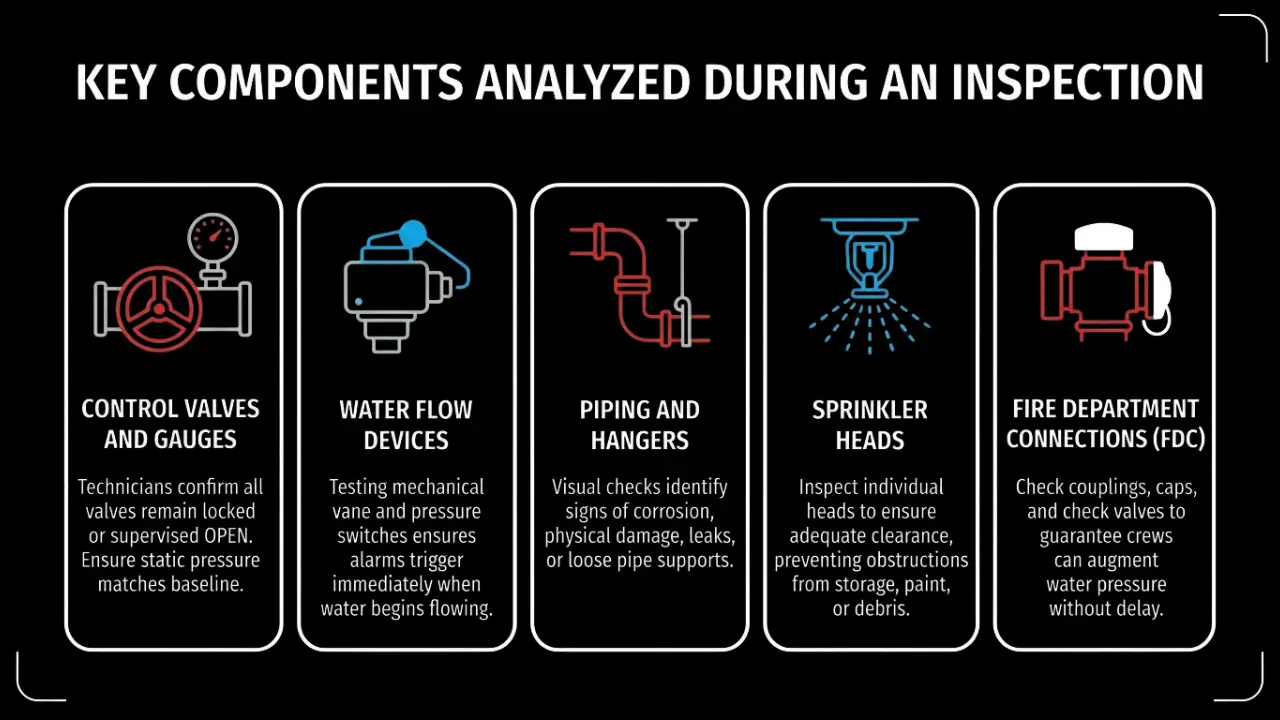
- Control Valves and Gauges: Technicians confirm that all valves remain locked or supervised in the open position and that static pressure readings match baseline criteria.
- Water Flow Devices: Testing mechanical vane and pressure switches ensures alarms trigger immediately when water begins flowing through the system.
- Piping and Hangers: Visual checks identify signs of corrosion, physical damage, leaks, or loose pipe supports.
- Sprinkler Heads: Inspecting individual heads ensures adequate clearances, preventing obstructions from storage racks, paint, or accumulated debris.
- Fire Department Connections (FDC): Checking couplings, caps, and check valves guarantees emergency crews can augment water pressure without delay.
Required Fire Sprinkler Maintenance Schedules
Ensuring compliance requires establishing recurring inspection intervals. The NFPA 25 framework outlines several routine testing intervals tailored to commercial fire protection equipment:
Weekly and Monthly Visual Checks
Facility managers should conduct routine visual checks on control valves and pressure gauges. Unsupervised valves require weekly checks to verify they remain fully open, while electrically supervised valves can be checked monthly.
Quarterly Testing Protocols
Professional inspection teams conduct functional tests every three months. Key services include testing waterflow alarm devices, exercising main drain connections to verify adequate water supply, and checking pressure relief valves.
Annual Comprehensive Testing and Certification
Annual evaluations cover every component of your commercial fire protection setup. Licensed technicians execute main drain flow tests, test freezing-point levels in antifreeze systems, inspect hanger supports, and manually trip dry-pipe valves. Successful annual testing results in updated, state-compliant inspection tags on your physical equipment.
Five-Year Internal Inspections
Every five years, fire protection systems undergo internal assessments. Technicians open pipe connections to check for internal obstructions, sludge accumulation, scale build-up, or Microbiologically Influenced Corrosion (MIC) that could restrict water flow during a fire.
Property owners managing large-scale facilities can streamline compliance by combining fire sprinkler upkeep with comprehensive commercial fire alarm maintenance services.
Why Regular Sprinkler System Testing Prevents System Failures
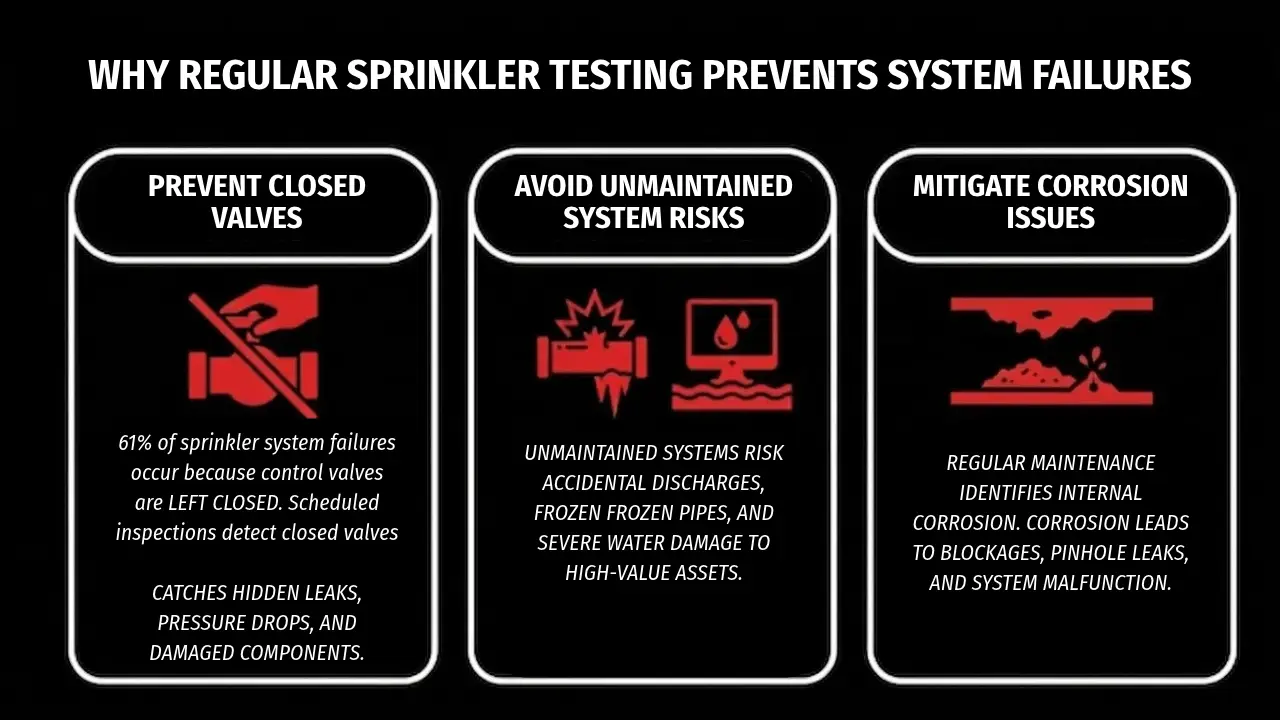
Skipping routine maintenance creates significant operational liabilities. Historical data shows that 61% of fire sprinkler system failures occur simply because control valves were closed before a fire broke out. Scheduled inspections catch closed valves, hidden leaks, pressure drops, and damaged components before emergencies occur.
Unmaintained systems also risk accidental discharges, frozen or burst pipes during winter freezes, and severe water damage to high-value assets. Facilities housing sensitive digital infrastructure require specialized solutions. For example, installing dedicated data center fire sprinklers or clean agent suppression systems protects critical hardware while maintaining life safety standards.
Selecting the Right Fire Protection Partner in Texas
Partnering with an experienced life safety provider simplifies compliance and protects your commercial investments. Qualified contractors offer end-to-end support, including system design, professional installation, emergency repairs, and multi-system inspections.
Working with a single specialized contractor streamlines maintenance for fire alarms, wet-pipe sprinklers, dry-pipe systems, and special hazard suppression systems. Reviewing the overall cost of commercial fire sprinkler installation and ongoing maintenance plans helps facility directors budget effectively while avoiding code violation fines.
Business owners across Texas trust FireTron to deliver dependable, code-compliant commercial fire sprinkler inspections and life safety services tailored to their specific operational needs.
Industry Safety Insight: According to reports published by the National Fire Protection Association (NFPA), shut control valves account for 61% of all fire sprinkler system failures during building fires, emphasizing the critical importance of routine, certified valve and system inspections. Source: NFPA Research – U.S. Experience with Sprinklers