Fire System Inspection Reports and Tags: What Building Owners Need to Know
For commercial building owners and property managers, fire safety is not just a matter of checking a box; it is a continuous obligation to protect lives, safeguard assets, and remain compliant with strict state and local regulations. A critical component of this responsibility revolves around maintaining accurate documentation and visible proof of equipment compliance. Understanding the intricacies of fire system inspection tags and navigating the paperwork behind a comprehensive fire inspection report can mean the difference between a safe facility and devastating legal or financial liabilities.
In states like Texas, where local jurisdictions enforce rigorous National Fire Protection Association (NFPA) standards, staying on top of your fire protection infrastructure requires a clear understanding of what happens before, during, and after an inspector visits your site. This guide breaks down everything building owners must know about system tagging, compliant reporting, and keeping your local authorities satisfied.
Understanding the Basics of Texas Fire System Inspection and Compliance
Every commercial property must undergo routine testing to verify that its life safety systems will perform exactly as intended during an emergency. A standard fire system inspection tags program serves as the frontline visual indicator that your property has been evaluated by licensed professionals. These physical markers provide immediate, on-site confirmation to structural occupants, facility managers, and visiting inspectors that your hardware is functional.
However, compliance does not stop at the physical equipment. The digital or paper trail generated during these evaluations is equally vital. A fire protection inspection report is a comprehensive legal record outlining the inventory of your safety equipment, the specific testing procedures performed, any operational deficiencies discovered, and the corrective actions required to bring the system back to baseline standards.
Failing to maintain these records or ignoring missing tags can result in severe penalties, including costly fines, increased insurance premiums, or a potential “order to vacate” from local authorities. Property management teams must treat these documents as essential operational assets.
The Critical Role of Fire System Tagging on Life Safety Equipment
When an authorized technician finishes evaluating a building’s life safety infrastructure, they apply specific markers directly to the hardware. The practice of fire system tagging serves as an immediate status update for anyone interacting with the equipment. Different colors and types of tags convey distinct messages regarding the operational readiness of the system.
Decoding Fire Sprinkler Inspection Tags and Color Codes
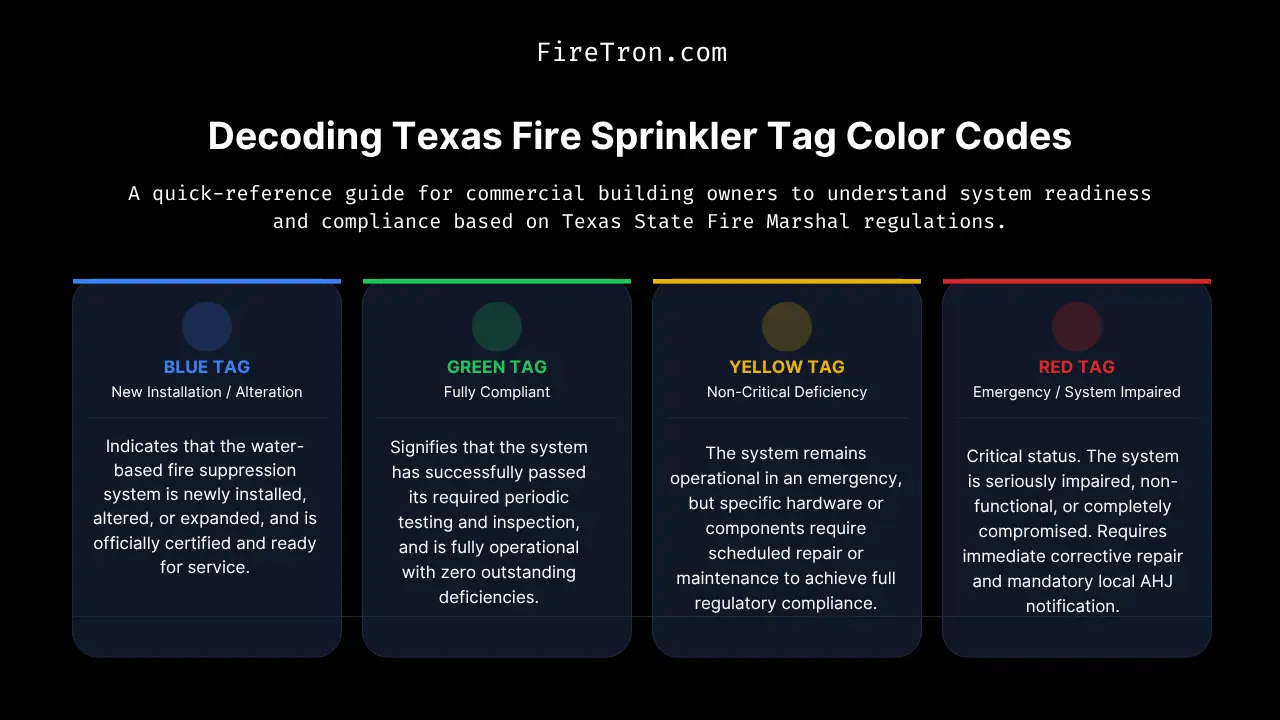
Water-based suppression hardware requires meticulous oversight. Technicians utilize specialized fire sprinkler inspection tags to communicate whether a system is fully functional, partially impaired, or completely non-operational. In many jurisdictions, including those following the Texas Department of Insurance (TDI) and State Fire Marshal regulations, specific color hierarchies are strictly enforced:
- Blue Tags: Generally indicate that a system is newly installed, altered, or expanded and is ready for service.
- Green Tags: Signify that the system has passed its required periodic inspection and is fully functional without any outstanding deficiencies.
- Yellow Tags: Indicate a non-critical deficiency. The system will still operate in an emergency, but certain components require repair or maintenance to achieve full compliance.
- Red Tags: Constitute an emergency status. A red tag means the system is seriously impaired, non-functional, or completely compromised, requiring immediate corrective action.
The Official Inspection Tag Requirements for Commercial Properties
Regulatory bodies mandate strict inspection tag requirements to prevent fraud and ensure accountability. An official tag cannot simply be a generic piece of cardboard. It must be a durable, weather-resistant label securely attached to the main control valves, risers, or panels. The tag must explicitly list the servicing company’s license number, the signature or certification number of the inspecting technician, the exact date of the evaluation, and the specific type of test performed (such as an annual or five-year internal inspection).
Navigating the Fire Alarm Inspection Report and Suppression Documentation
While physical tags provide an immediate visual cue on the maintenance floor, the detailed paperwork validates your compliance status in a courtroom or an insurance audit. A thorough fire alarm inspection report documents the testing of smoke detectors, pull stations, strobe lights, horns, annunciator panels, and backup battery systems.
Similarly, a complete fire inspection report for suppression systems tracks static and residual water pressures, main drain flows, and tamper switch functionality. If an inspector identifies any flaws, they will categorize them as either minor deficiencies or critical impairments. Building owners typically have a limited window, often 30 days for non-critical issues, to schedule repairs and maintain their compliant status.
According to the National Fire Protection Association, the documentation process is a foundational element of a building’s overall risk management strategy:
“The inspection, testing, and maintenance of fire protection systems are critical to ensuring that the systems will operate as intended during a fire event. Comprehensive documentation provides the historical record necessary to verify that these life safety systems are being cared for in accordance with established codes and standards.” –National Fire Protection Association
Managing AHJ Notification and Avoiding Costly Penalties
One of the most misunderstood aspects of commercial property management is the communication loop with local regulators. The Authority Having Jurisdiction (AHJ), which is usually the local fire marshal or code enforcement office, has the ultimate legal say over your building’s occupancy status.
When a system receives a yellow or red tag during a Texas fire system inspection, the licensed fire protection company is often legally obligated to initiate an AHJ notification. This process informs the local fire marshal that a building within their jurisdiction has an active deficiency or system impairment.
Building owners must act swiftly once an AHJ is notified. If a system is red-tagged and the impairment cannot be fixed immediately, the fire marshal may require the building to implement a continuous “fire watch,” where designated personnel patrol the facility around the clock to detect smoke or flames. Failing to address an AHJ notification promptly can lead to citations, heavy financial penalties, or the immediate closure of your business operations.
Best Practices for Maintaining Fire Inspection Compliance

Achieving total fire inspection compliance requires proactive asset management rather than reactive panic before an annual inspection date. Building owners should establish a strict operational framework to keep their properties safe and fully certified.
First, always partner with an experienced, fully licensed fire protection firm that understands the specific municipal amendments in your area. Code requirements can vary significantly between different cities, and working with experts ensures your paperwork satisfies local fire marshals perfectly.
Second, keep a dedicated digital and physical archive of every single fire protection inspection report generated for your property. Most modern codes require building owners to retain these records for at least three to five years, and making them easily accessible will save substantial time during unannounced municipal walkthroughs.
Finally, conduct regular internal visual checks between official visits. Ensure that your fire extinguisher tags are intact, that control valves are locked in the open position, and that no inventory blocks access to your main risers or fire alarm panels. Catching a broken seal or a missing tag early allows you to schedule routine maintenance before it escalates into an official code violation.
Protecting your commercial investment requires diligent oversight of your physical equipment and your compliance paperwork. Partnering with a reliable professional like FireTron ensures your systems are properly tested, accurately tagged, and fully prepared to keep your building secure and compliant year after year.