Clean Agent Fire Suppression Systems for Server Rooms: What Businesses Need to Know
For modern businesses operating across Texas, data is one of the most valuable assets driving daily operations. From corporate headquarters in Houston to growing technology hubs in Austin and Dallas, companies rely heavily on network infrastructure to keep their services running. However, the high-density electronics housed within server rooms and data centers introduce a unique set of fire hazards. Standard commercial sprinkler installations, while highly effective for structural protection, can cause catastrophic, irreversible damage to sensitive electronic equipment if triggered.
To mitigate this risk without sacrificing safety, facilities require specialized solutions. A clean agent fire suppression system is the industry standard for safeguarding high-value, tech-heavy spaces. These systems extinguish fires rapidly without water, protecting infrastructure, preventing costly downtime, and maintaining strict compliance with national safety codes.
What Is a Clean Agent Fire Suppression System?
A clean agent system is an advanced gas suppression system designed to extinguish fires in enclosed spaces without leaving any liquid, solid, or conductive residue behind. Unlike traditional water-based sprinklers, these systems use electrically non-conductive gaseous agents that are safe for both sensitive electronic components and human occupants.
These systems operate under the strict guidelines of the National Fire Protection Association, specifically NFPA 2001 (Standard on Clean Agent Fire Extinguishing Systems). They are engineered to detect and suppress fires at their earliest stages, long before a thermal element on a traditional sprinkler head would sustain enough heat to activate. This rapid response makes them the premier choice for critical equipment fire protection.
Why Traditional Sprinklers Fall Short in Data Environments
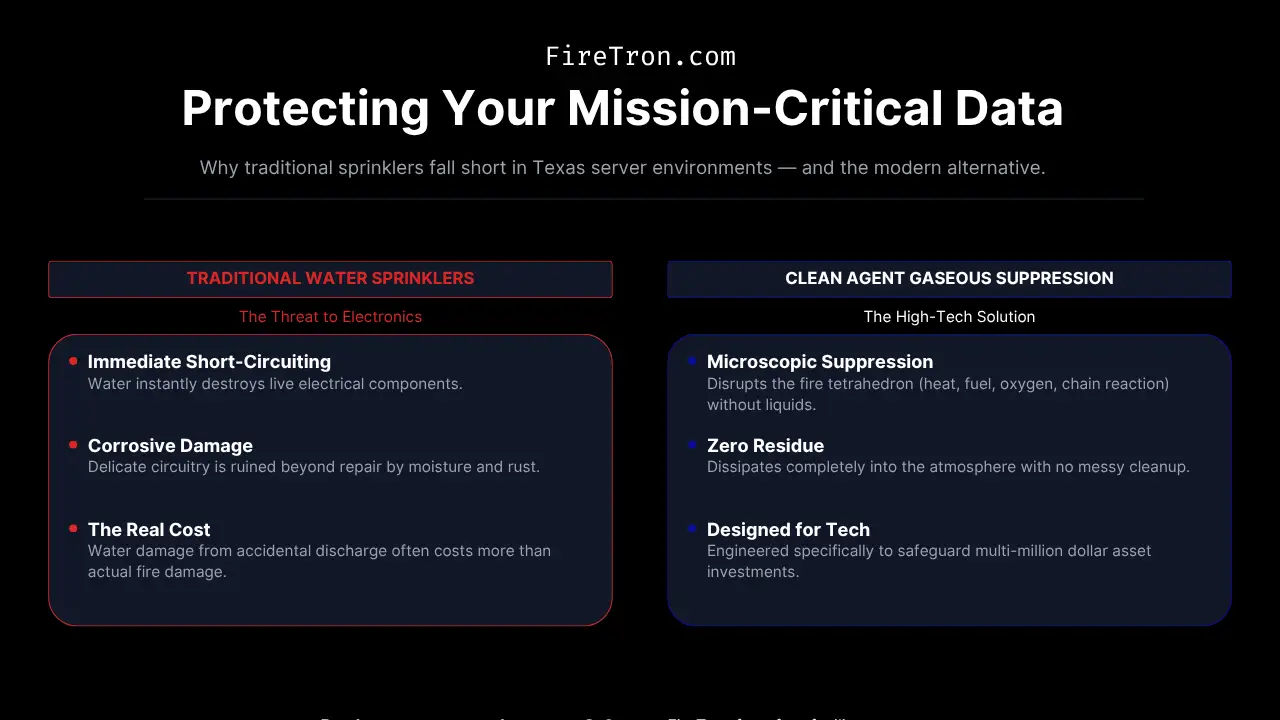
While a commercial fire sprinkler system is vital for general building safety, relying on water to extinguish an electrical fire in a server environment poses massive operational challenges. Water causes immediate short-circuiting, corrodes delicate circuitry, and frequently forces facilities into extended periods of unplanned downtime. For a facility manager, the water damage from an accidental discharge or a localized fire can often cause more financial harm than the fire itself.
A gaseous clean agent suppression setup acts as the ideal sprinkler alternative for server rooms. When a fire is detected, the system floods the room with gas within 10 seconds, suppressing the fire at the microscopic level by disrupting the fire tetrahedron (heat, fuel, oxygen, and a chemical chain reaction). Because the agent dissipates completely into the atmosphere after discharge, there is no messy cleanup, no water damage, and minimal interruption to business operations.
Key Advantages for Texas Facilities
- Zero Water Damage: Eliminates the risk of ruining multi-million dollar servers with water or chemical powders.
- Minimal Downtime: Rapid suppression allows your business to resume operations almost immediately following an inspection and recharge.
- People-Safe: Approved gaseous agents are non-toxic at design concentrations, allowing personnel to evacuate safely during a discharge.
Common Types of Gas Suppression Systems
Several types of clean agents are widely utilized across industrial and commercial facilities today. Choosing the right option depends on the size of the room, environmental considerations, and specific equipment configurations.
Chemical Agents: FM-200 Fire Suppression
An FM-200 fire suppression system utilizes HFC-227ea, a reliable chemical gas that removes heat energy from the fire at a molecular level. It requires minimal storage space for agent cylinders, making it an excellent choice for compact server closets and mid-sized data centers where square footage is at a premium.
Inert Gas Systems
Inert gas systems use naturally occurring gases like nitrogen, argon, or a blend of both (such as Inergen) to reduce the oxygen level in the room to a point where fire can no longer sustain itself, while still leaving ample oxygen for humans to breathe. These systems are highly environmentally friendly, featuring zero ozone depletion potential.
Manufacturer Solutions: Fike and Kidde Fire Suppression
Working with premium equipment is essential for ensuring system reliability. Systems like a Fike fire suppression system or a Kidde fire suppression system offer advanced, customized configurations tailored to unique architectural constraints.These systems are engineered to integrate seamlessly with intelligent smoke detection arrays, ensuring prompt agent release when every second counts.
Critical Equipment Fire Protection for Data Centers
In large-scale facilities, localized protection is often paired with room-wide flooding. Comprehensive data center fire suppression strategies involve multi-stage detection mechanisms. This often includes Very Early Warning Aspirating Smoke Detection (VESDA) systems, which actively sample the air for invisible microscopic particles of combustion before open flames or visible smoke appear.
The regulatory importance of these systems cannot be overstated. According to the leading international authority on fire safety and building standards:
“Clean agent systems are useful for protecting hazards where an electrically nonconductive medium is essential or where clean-up of other mediums presents a problem. These systems are designed to protect rooms containing high-value assets, such as data centers, telecommunications facilities, and museums, where water damage must be avoided.” — NFPA 2001: Standard on Clean Agent Fire Extinguishing Systems
Implementing these solutions ensures your facility complies with both local Texas building codes and strict insurance requirements, which frequently mandate specific fire protection asset classes for mission-critical IT infrastructure.
Designing and Maintaining Your Server Room Fire Suppression System
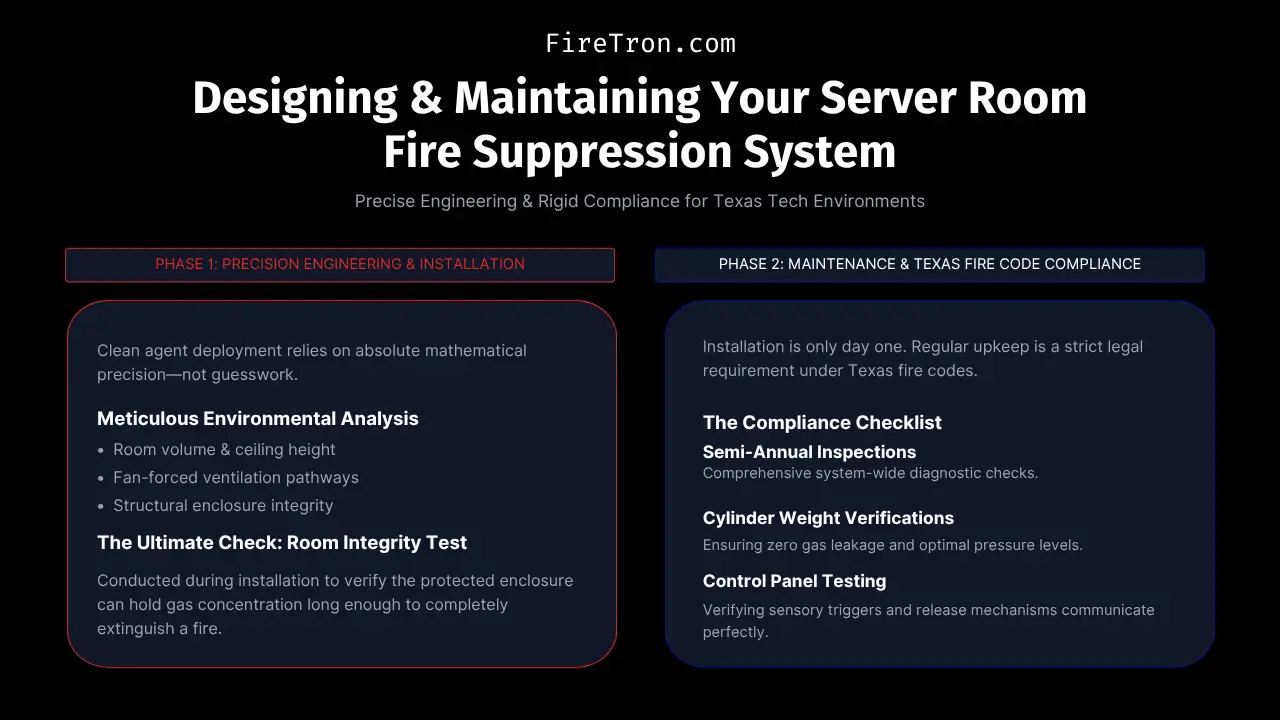
Installing a clean agent fire suppression system involves precise engineering calculations. Factors such as room volume, fan forced ventilation, enclosure integrity, and ceiling height must be meticulously analyzed. A room integrity test is conducted during installation to ensure the protected enclosure can hold the gas concentration long enough to completely extinguish the fire.
Regular maintenance is also a strict legal requirement under Texas fire codes. Semi-annual inspections, cylinder weight verifications, and control panel testing ensure that the system will execute flawlessly during an emergency. Facility managers must partner with a licensed, experienced fire protection provider to handle ongoing code compliance and system certifications.
Partner with Texas’s Trusted Life Safety Specialists
Securing your critical digital infrastructure requires an integrated, professional approach to fire safety. From initial design and engineering to professional commercial sprinkler installation and clean agent maintenance, having a single expert partner streamlines compliance and ensures maximum reliability.
Whether you manage a single server room in Corpus Christi, an educational data center in College Station, or a large-scale industrial facility in Victoria, working with experienced professionals guarantees your assets remain fully protected. Contact FireTron today to speak with our certified team about optimizing your commercial fire protection and keeping your operations resilient against fire hazards.