Best Types of Fire Sprinkler Heads
 Fire sprinkler systems are one of the most effective life safety tools in commercial buildings, schools, and institutional facilities across Houston, Austin, and the rest of Texas. While most people understand the importance of having a sprinkler system, fewer decision makers understand that the type of sprinkler head installed plays a major role in system performance, code compliance, and overall fire protection.
Different environments require different sprinkler head designs. Ceiling construction, room layout, occupancy type, and aesthetic considerations all influence which sprinkler head is appropriate. For property managers and school administrators, understanding the four types of fire sprinkler heads helps ensure proper protection, avoid costly rework, and support long-term compliance with Texas fire codes and NFPA standards.
Four Types of Fire Sprinkler Heads
The National Fire Protection Association recognizes several sprinkler head configurations, but most commercial and educational facilities rely on four primary types. Each is designed to distribute water in a specific pattern based on how and where it is installed.
| Sprinkler Head Type | Mounting Position | Common Applications |
|---|---|---|
| Upright Sprinkler Head | Mounted upright above piping | Mechanical rooms, warehouses, and exposed piping areas |
| Pendant Sprinkler Head | Hangs down from the ceiling piping | Offices, classrooms, corridors |
| Sidewall Sprinkler Head | Mounted on the wall near the ceiling | Hallways, small rooms, retrofits |
| Concealed Sprinkler Head | Hidden behind the ceiling cover plate | Finished offices, schools, and public spaces |
Upright Sprinkler Heads
An upright sprinkler head is installed above the water supply piping and sprays water upward against a deflector. The water then disperses downward in a dome-shaped pattern. This design makes upright sprinkler heads ideal for spaces where piping is exposed or ceiling obstructions exist.
Pros of Upright Sprinkler Heads
- Reliable water distribution in open areas
- Less prone to damage in exposed environments
- Effective in spaces with structural obstructions
Cons of Upright Sprinkler Heads
- More visible than other fire sprinkler head types
- Not ideal for finished ceilings or aesthetic spaces
Upright sprinkler heads are most commonly used in warehouses, mechanical rooms, parking garages, and industrial spaces where exposed piping is acceptable, and performance is the primary concern.
Pendant Sprinkler Heads
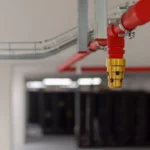
A pendant sprinkler head is the most widely used option in commercial buildings and schools. It is installed below the ceiling and releases water downward in a uniform spray pattern, making it effective for occupied spaces.
Pros of Pendant Sprinkler Heads
- Excellent fire coverage for standard ceiling heights
- Compatible with most commercial occupancies
- Cost-effective and widely available
Cons of Pendant Sprinkler Heads
- Visible below the ceiling surface
- Can be damaged in high-traffic areas if not protected
Pendant sprinkler heads are commonly used in classrooms, office buildings, retail spaces, and corridors throughout Texas. They are frequently specified during fire sprinkler system installation cost planning because they balance performance and affordability.
Sidewall Sprinkler Heads
A sidewall sprinkler head is mounted horizontally on a wall near the ceiling. Instead of spraying in a circular pattern, it distributes water outward in a half circle, making it ideal for narrow or limited spaces.
Pros of Sidewall Sprinkler Heads
- Ideal for hallways and small rooms
- Reduces the need for ceiling piping
- Effective for retrofit installations
Cons of Sidewall Sprinkler Heads
- Limited coverage area compared to pendant heads
- Requires precise placement for proper performance
Sidewall sprinkler heads are often used in school corridors, hotel rooms, offices with narrow layouts, and spaces where ceiling access is limited.
Concealed Sprinkler Heads
A concealed sprinkler head is a type of pendant sprinkler that is hidden behind a flat cover plate. When heat activates the sprinkler, the cover plate drops away, allowing the head to discharge water.
Pros of Concealed Sprinkler Heads
- Minimal visual impact
- Blends seamlessly with finished ceilings
- Meets fire code requirements while preserving aesthetics
Cons of Concealed Sprinkler Heads
- Higher material and installation cost
- Requires careful coordination during construction
Concealed sprinkler heads are commonly installed in administrative offices, libraries, auditoriums, and public-facing areas within schools and commercial properties. Many of the best fire sprinkler companies recommend them when appearance is a priority.
Automatic fire sprinkler systems reduce the risk of death by more than 80 percent compared to buildings without sprinkler protection. National Fire Protection Association
Get Quotes on Sprinkler Head Installations in TX

Selecting the right sprinkler head type is only part of an effective fire protection strategy. Proper design, spacing, hydraulic calculations, and installation are critical for compliance with NFPA standards and Texas fire codes.
Whether you are upgrading an existing system or planning a new build, working with a licensed provider of Texas fire sprinkler installation services ensures your system is designed for your specific occupancy and risk profile.
For expert guidance, accurate pricing, and code-compliant installation across Houston, Austin, and the rest of Texas, contact FireTron to request custom sprinkler head recommendations and project quotes.
Did You Know? According to the National Fire Protection Association, buildings protected by fire sprinkler systems experience 90 percent less property damage per fire compared to buildings without sprinklers.