FCL-X vs ABC Fire Extinguishers: Which One Is Right for Lithium-Ion Battery Fires?
As commercial spaces integrate more high-performance technologies, facility managers and business owners must constantly re-evaluate their commercial fire protection frameworks. From electronic warehouses to office server complexes, the equipment driving modern operations has fundamentally changed. The widespread adoption of energy-dense power storage means specialized hazards are now common in corporate environments. Ensuring workplace safety today requires a modern understanding of fire system inspection tags and the specific classifications of extinguishing agents needed to suppress sophisticated hazards.
Among these emerging workplace challenges, energy storage equipment presents unique risks that traditional safety protocols were never engineered to handle. When a thermal event occurs in modern storage packs, conventional methods frequently prove inadequate. Choosing between an FCL-X extinguisher and a standard multi-purpose chemical unit is a critical safety decision for protecting high-tech infrastructure.
Understanding the Threat of a Lithium-Ion Battery Fire
Traditional industrial risks typically involve common combustibles, flammable liquids, or standard electrical equipment. However, an ABC extinguisher lithium battery fire scenario introduces an entirely different chemical phenomenon known as thermal runaway. Thermal runaway happens when an internal short circuit, mechanical damage, or manufacturing defect causes temperature and pressure to spike rapidly within a cell, leading to a self-sustaining chain reaction.
During thermal runaway, the energy pack generates its own oxygen and intense heat while releasing highly toxic, flammable gases. Standard extinguishing mechanisms struggle with this because simply smothering the flames does not stop the internal chemical breakdown. Without intense, targeted cooling to break the thermal cycle, cells can continue to experience secondary flare-ups hours or even days after the visible flames are extinguished.
The Limits of an ABC Extinguisher on Energy Storage Fires
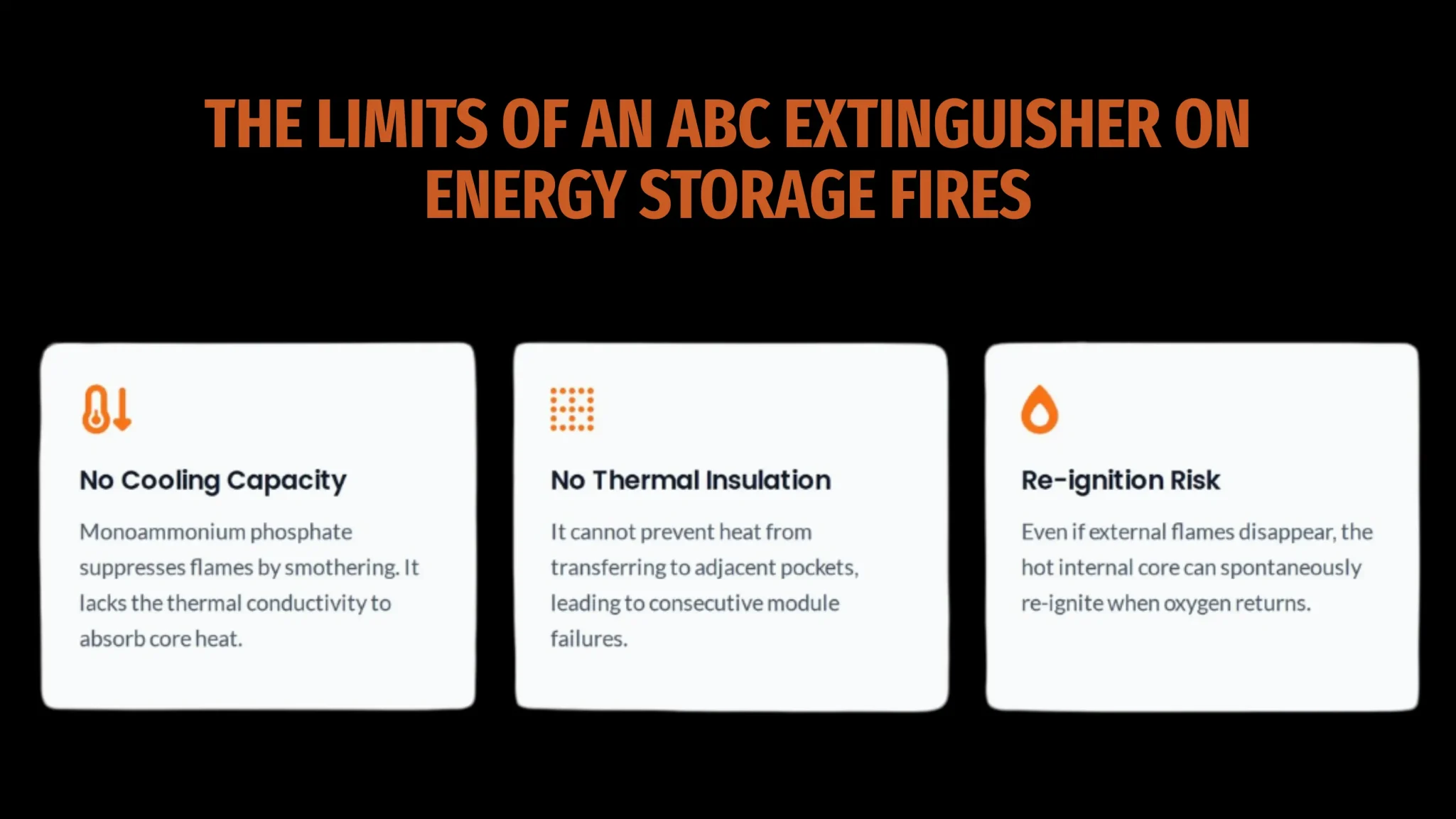
The standard dry chemical unit is the backbone of most commercial fire safety solutions. These units utilize monoammonium phosphate, which is highly effective at interrupting the chemical chain reactions of Class A (trash, wood, paper), Class B (liquids), and Class C (electrical) hazards. However, relying on a conventional ABC extinguisher for a lithium-ion battery fire introduces major operational gaps:
- Lack of Cooling Capacity: Dry chemicals are designed to suppress flames by smothering them and interrupting the combustion process. They lack the thermal conductivity needed to absorb massive amounts of heat from a deeply seated internal cell failure.
- No Thermal Insulation: Because monoammonium phosphate does not cool the surrounding cells, it cannot prevent the heat from spreading to adjacent battery pockets. This often leads to consecutive failures across the entire power module.
- Re-ignition Vulnerability: Even if the external flames disappear momentarily, the internal core remains hot enough to spontaneously re-ignite as soon as oxygen becomes available again.
Because of these limitations, international safety authorities emphasize that standard dry chemicals are insufficient for advanced energy storage hazards. According to official documentation from the National Fire Protection Association:
Standard dry chemical extinguishing agents do not possess the necessary cooling capabilities to permanently halt thermal runaway in advanced energy storage configurations, making specialized suppression agents critical for absolute mitigation. Source: National Fire Protection Association
What Is an FCL-X Extinguisher and How Does It Work?
To overcome the limits of traditional dry powders, advanced fire safety engineering developed the FCL-X extinguisher. This technology is specifically formulated as a dedicated fire extinguisher for lithium batteries, designed to counteract the unique dynamics of thermal runaway through a combination of thermal cooling and structural encapsulation.
The specialized agent in an FCL-X unit utilizes a liquid suspension that expands when deployed over a thermal hazard. It creates a dense, heat-resistant barrier directly over the compromised cells. This process provides two distinct defense mechanisms:
First, the solution rapidly absorbs extreme thermal energy, cooling the compromised cells below the critical threshold required to sustain thermal runaway. Second, the agent encapsulates the individual battery components, blocking the release of flammable gases and cutting off the oxygen supply required for external flaming. This dual-action cooling and encapsulation makes it an incredibly effective tool for protecting environments containing electric vehicles, power tools, or commercial battery storage banks.
FCL-X vs ABC Fire Extinguisher: Side-by-Side Comparison
When assessing life safety solutions for commercial facilities, understanding how these agents perform under pressure is essential. Below is a direct comparison of how these two distinct extinguishing technologies handle complex battery fires:
| Performance Feature | Standard ABC Extinguisher | Specialized FCL-X Extinguisher |
|---|---|---|
| Primary Suppression Method | Smothers flames via chemical powder coverage. | Cools cell core and encapsulates fire hazard. |
| Thermal Runaway Mitigation | Ineffective; cannot stop internal cell heat production. | Highly effective; rapidly reduces internal core temperatures. |
| Prevention of Neighboring Cell Contagion | Minimal; thermal energy easily transfers to adjacent cells. | Excellent; establishes a cold barrier to stop heat transfer. |
| Risk of Secondary Re-ignition | High; risk remains until battery fully burns out. | Extremely low; core is insulated and permanently cooled. |
Implementing Comprehensive Facility Safety Protocols
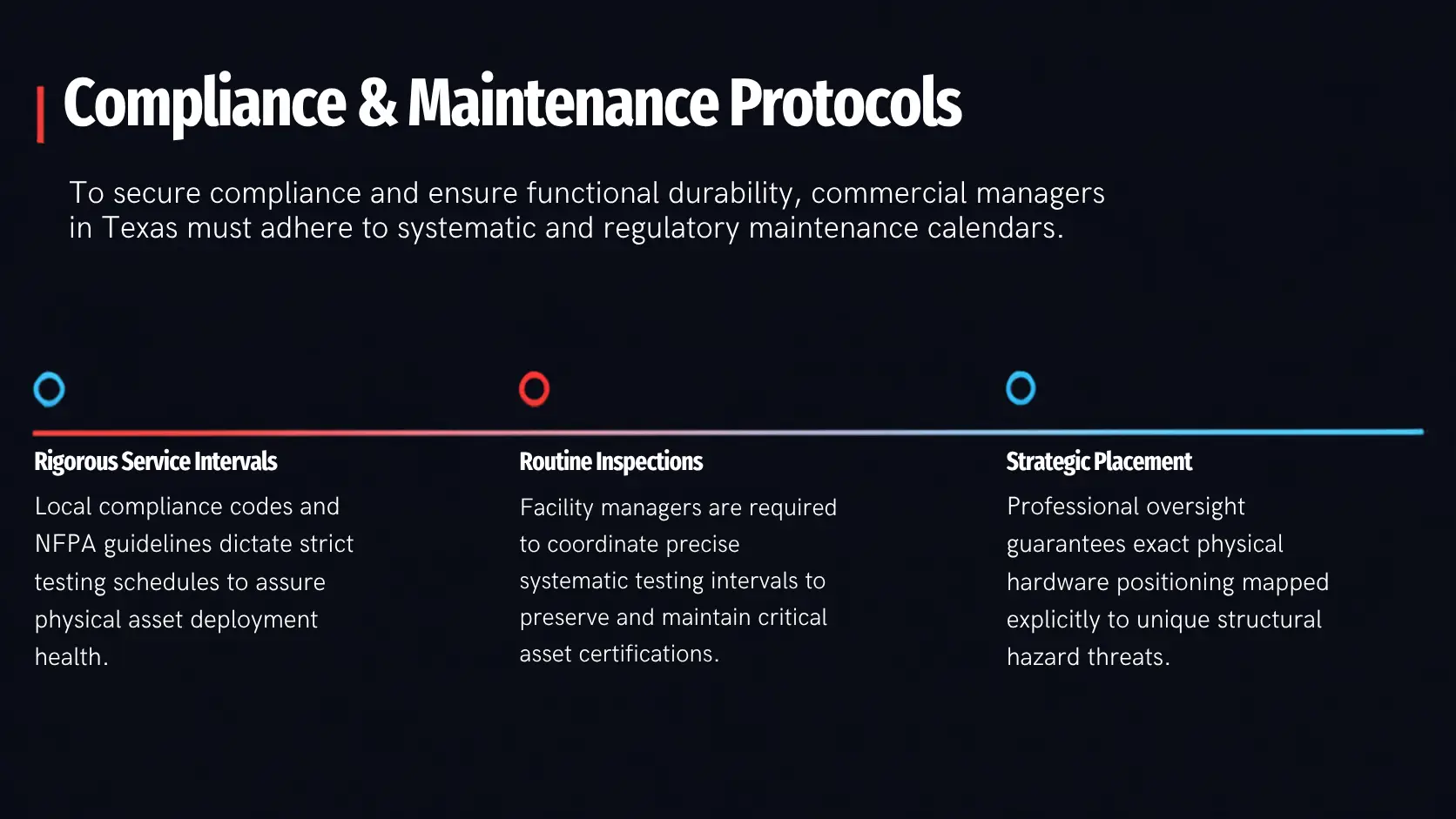
Selecting the right hardware is only the first step in a complete commercial fire protection strategy. Handheld assets must be backed by professionally engineered systems and regular maintenance protocols to guarantee operational readiness. In industrial and commercial settings, portable extinguishers should always function as a first line of defense alongside advanced, automated fire suppression systems configured for specific facility hazards.
Furthermore, local compliance codes dictate rigorous service intervals for all safety systems. Facility managers must coordinate routine testing and compliance checks to keep their setups fully certified. Working with a dedicated provider ensures your hardware is properly matched to the facility’s hazards, correctly positioned throughout the building, and fully prepared for emergencies.
Whether you manage an electronic assembly facility, a fulfillment hub, or a modern office space, your fire safety systems must evolve alongside your technology. Upgrading to specific suppression technologies like FCL-X for high-risk zones protects your property, ensures operational continuity, and keeps your workforce safe. For comprehensive system design, code compliance, and professional field support, partner with the regional safety leaders at FireTron.
Critical Industry Insight: Commercial electronics and battery storage hazards continue to surge across industrial sectors. Data provided by the Fire Safety Research Institute indicates that battery failure events in commercial and residential properties have escalated by over 130% over a recent multi-year observation window, underscoring the urgent necessity for advanced suppression infrastructure in technology-driven businesses. Source: Fire Safety Research Institute